Potatoes for Frozen French Fries
Confirm the exact frozen French fries product, cut, style, application and expected bulk-supply requirement.

Understand how potato dry matter, reducing sugar, tuber length, shape, storage and raw-material inspection influence frozen French fries colour, texture, yield and processing performance. This page is written for international importers, frozen food distributors, foodservice procurement teams, QSR and restaurant buyers, wholesalers, retailers and private-label brands evaluating fry-grade potato selection, dry matter, reducing sugar and raw-material consistency.
Use it to compare the product or supply requirement, prepare better questions for a frozen French fries supplier, and move from initial sourcing to sample, specification, packaging and repeat-order planning.
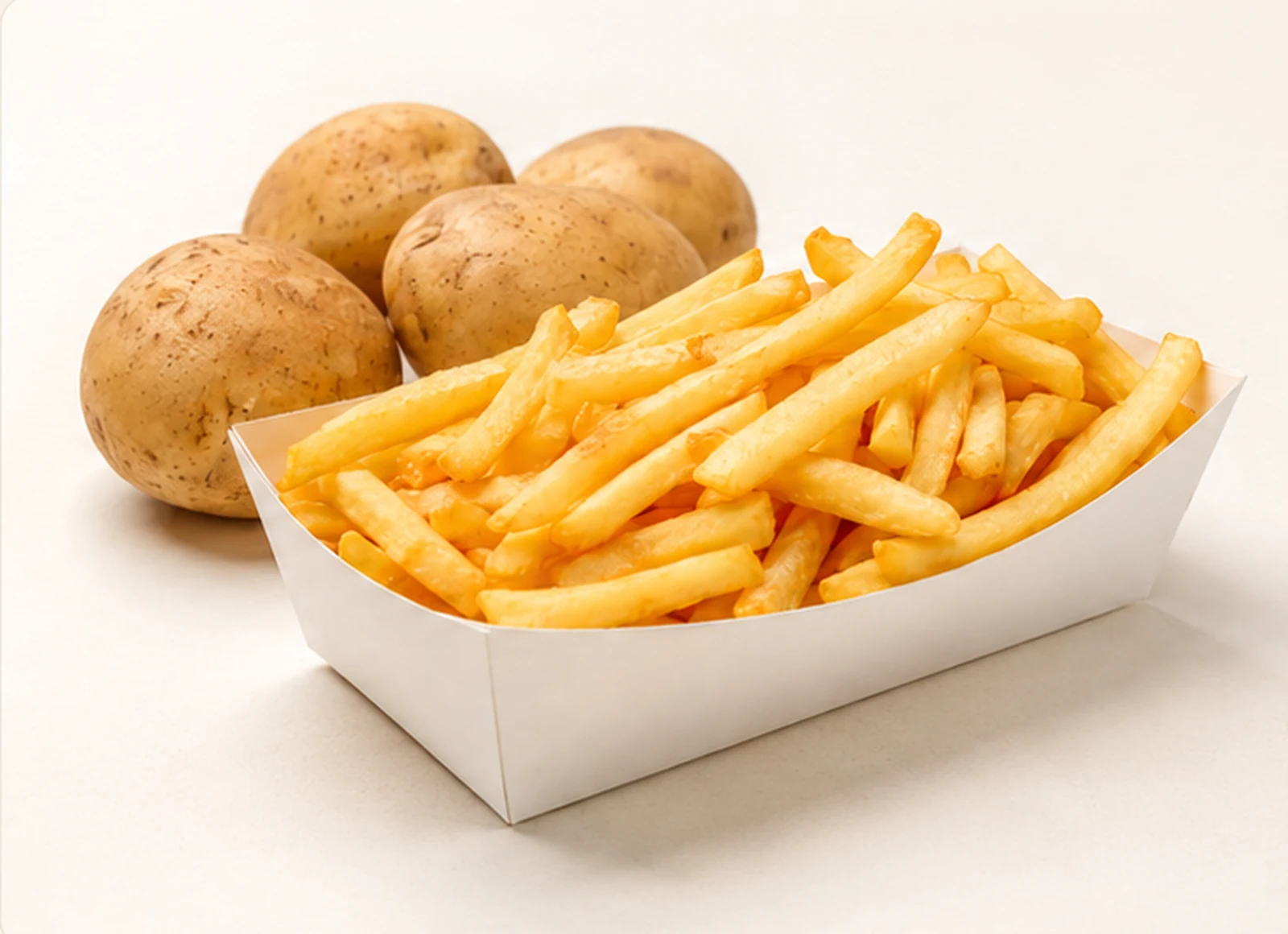
A stable frozen French fries program starts with potatoes that fit the processing objective. Buyers often focus on the final 7mm, 9mm, 10mm or 12mm cut, but raw-potato dry matter, reducing sugar, tuber size, shape and storage condition can influence colour, texture, processing yield and finished-product consistency. Raw-material control should therefore be connected to the final approved specification.
Use this page to verify manufacturing evidence for dry matter, reducing sugar, tuber shape/length, storage condition and fry colour: where it is controlled, how it is checked and how the record connects to the actual SKU. Evidence for dry matter, reducing sugar, tuber shape/length, storage condition and fry colour is more useful than broad factory claims because procurement and QA can trace it to a product decision.
Dry matter is one of the raw-material factors processors review when targeting a specific frozen French fries texture and processing behaviour. It should not be judged in isolation: variety, storage, process conditions and the finished-product specification also matter. Procurement teams evaluating fry-grade potatoes or a frozen French fries manufacturer can ask how incoming raw material is screened for the intended product.
Link process records, checkpoints or sample results for dry matter, reducing sugar, tuber shape/length, storage condition and fry colour to the approved SKU. Keeping dry matter, reducing sugar, tuber shape/length, storage condition and fry colour specific prevents factory, process and quality pages from collapsing into the same narrative about stable production.
Reducing sugar is an important consideration in potato processing because it can influence colour development during frying. Storage history and raw-material condition can affect this characteristic, so fry-colour control begins before the product reaches the final fryer. Buyers who have strict colour requirements should connect the approved frozen French fries fry-colour reference with the supplier’s raw-material and process controls.
When a deviation touches dry matter, reducing sugar, tuber shape/length, storage condition and fry colour, identify the lot or process point, compare the agreed criterion and document the disposition. A recorded response to dry matter, reducing sugar, tuber shape/length, storage condition and fry colour gives batch-consistency claims a traceable basis instead of another general statement.
Long, regular processing potatoes can support the production of longer straight-cut fries, while irregular raw material can influence length distribution and trimming. Incoming inspection can also review visible defects and suitability before processing. For QSR, restaurant and foodservice frozen French fries programs, raw-material selection is therefore part of the broader system used to manage cut consistency and repeat supply.
Use this page during supplier qualification only for questions about dry matter, reducing sugar, tuber shape/length, storage condition and fry colour. Packaging, export files, loading and commercial terms should remain outside the dry matter, reducing sugar, tuber shape/length, storage condition and fry colour evidence layer so each page keeps a clear job.
These questions stay with this page's real job: dry matter, reducing sugar, tuber shape/length, storage condition and fry colour. They are written for frozen French fries importers, foodservice buyers, distributors and private-label teams who need a useful decision, not another generic supplier FAQ.
The evidence here should demonstrate dry matter, reducing sugar, tuber shape/length, storage condition and fry colour at the actual frozen French fries SKU level. Ask where the relevant control happens, how it is checked and what record can be tied to the product being quoted or sampled. A factory photo is useful context, but it is not a substitute for evidence connected to potatoes for frozen French fries.
Link dry matter, reducing sugar, tuber shape/length, storage condition and fry colour to the approved specification, sample or lot reference so process evidence and product approval are not separate stories. When the buyer reviews fry grade potatoes, the question is whether the factory can show how the controlled step contributes to the actual commercial frozen French fries result.
Locate the lot, inspection point or process stage most directly related to dry matter, reducing sugar, tuber shape/length, storage condition and fry colour; compare it with the agreed acceptance criterion and record the disposition. Avoid starting with a broad claim that the factory is certified or experienced. For potato dry matter French fries, a useful deviation review identifies what changed, whether the product remains within specification and what evidence supports the decision.
Turn dry matter, reducing sugar, tuber shape/length, storage condition and fry colour into specific audit or supplier-qualification questions and ask for current, SKU-relevant evidence. Keep manufacturing qualification separate from packaging, export documents and container loading. This lets the importer judge whether the frozen French fries manufacturer controls the process relevant to reducing sugar French fries rather than simply presenting a long capability list.
Keep the approved specification, applicable manufacturing or quality record, lot/traceability reference and any acceptance point directly linked to dry matter, reducing sugar, tuber shape/length, storage condition and fry colour. For repeat bulk frozen French fries orders, this gives procurement and QA a consistent evidence trail. It also makes later supplier discussions more precise if a lot looks or performs differently.