
Frozen French Fries FAQ for International B2B Buyers
Find answers about product selection, sample testing, packaging, documents and quotation. Confirm order-specific details with the sales team.
Frozen French Fries FAQ for Importers, Foodservice Buyers, Distributors & Private-Label Teams
Use these buyer-focused answers to compare frozen French fries by cut size, frying performance, packaging, cold-chain requirements, supplier documentation and commercial fit. They are designed to help importers, QSR groups, restaurants, foodservice distributors, frozen-food wholesalers and private-label buyers prepare a clearer sample test or bulk frozen French fries RFQ before approving a final SKU.
01What frozen French fries cut sizes should I compare for foodservice?
Start with the cut sizes that match your service model, commonly 7mm, 9mm, 10mm and 12mm straight-cut frozen French fries. A thinner cut may support faster cooking and a higher surface-to-potato ratio, while a thicker cut can provide more potato body and a different plate appearance. Treat cut size as a product-format decision rather than a quality grade, then test the shortlisted foodservice frozen fries under your actual fryer load, oil-management routine, serving time and holding conditions.
02What is the difference between 7mm, 9mm, 10mm and 12mm frozen French fries?
As frozen French fries become thicker, the balance between exterior surface and potato interior changes, which can influence cooking workflow, texture perception, portion appearance and menu presentation. 7mm frozen fries, 9mm frozen fries, 10mm frozen fries and 12mm thick-cut fries therefore serve different operating preferences rather than representing a simple good-better-best hierarchy. Compare the actual SKU using the same cooking method and record fry colour, crispness, potato interior, breakage and holding behaviour.
03Are coated frozen French fries better for delivery and takeaway?
Coated frozen French fries are often considered by delivery, takeaway and high-hold foodservice operators because a coating system may be designed to support texture retention after frying. Performance is still product-specific, so do not approve a coated fries supplier based only on the word “coated.” Test the real product in the actual takeaway pack, ventilation condition and service interval, and compare it with an uncoated reference using the same fryer protocol.
04How should I test frozen French fries samples before bulk purchasing?
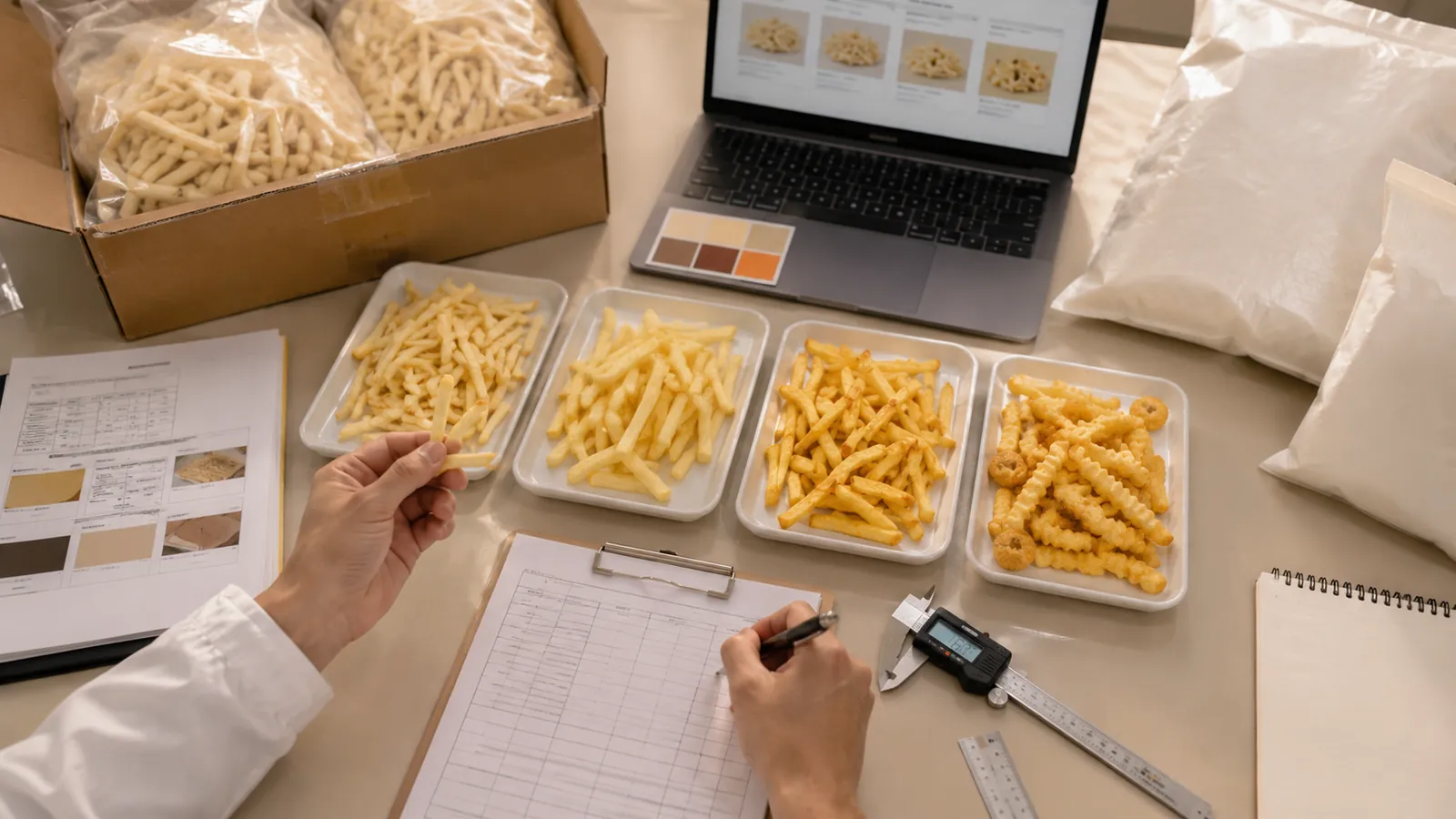
Use one controlled sample-evaluation method for every frozen fries supplier you compare. Keep fryer, oil condition, product state, batch size, cooking endpoint and holding interval as consistent as possible, then record fry colour, cut and length consistency, exterior crispness, potato interior, breakage, visible defects and pack-and-hold performance where relevant. Save the approved sample result together with the current written specification so procurement and QA teams have a reference when the first commercial frozen French fries batch arrives.
05What should I ask a frozen French fries manufacturer or supplier before approval?
Ask for the current product specification, cut or style identification, packaging configuration, frozen storage requirements, shelf-life information, relevant quality criteria, traceability approach and destination-specific export or compliance documents. Also clarify whether you are dealing with the manufacturer, exporter or trading supplier and which commercial details are confirmed for the exact SKU. A credible frozen French fries supplier should be able to connect the sample, specification, packaging and shipment discussion rather than relying only on general product claims.
06Can a frozen French fries supplier support private label or OEM programs?
Private-label frozen French fries and OEM frozen fries should be developed around an approved product first, then connected to bag format, carton configuration, artwork, label language, destination-market requirements, commercial quantity and production planning. Buyers should distinguish product approval from packaging approval because both affect the final project. Before committing to printed packaging, confirm the selected SKU, packaging dimensions, legal label content, artwork responsibility and the minimum commercial conditions for the private-label program.
07What packaging details should I confirm for wholesale or foodservice frozen French fries?
Confirm bag format, net content, units per carton, carton dimensions, shipping mark, label requirements, palletization where relevant and the final sales channel. Foodservice frozen French fries, wholesale frozen fries, retail frozen fries and private-label frozen fries can require different packaging logic even when the potato product is similar. Packaging also affects warehouse handling, reefer loading and the practical quantity per shipment, so use the approved pack rather than a generic carton assumption when planning a commercial order.
08How are frozen French fries shipped internationally?
Commercial frozen French fries require controlled frozen handling from storage through reefer loading, port transfer and international transportation. The exact temperature and handling requirements should follow the approved product specification and logistics plan instead of a generic website statement. Importers should confirm reefer container type, packaging configuration, palletization choice, destination port, transit expectations and responsibility under the agreed Incoterm so the cold-chain plan supports both product integrity and customs execution.
09What export documents may be required when importing frozen French fries?
Document requirements depend on the destination country, customer type and transaction. A buyer may need commercial documents, origin-related documents, product specifications, packing information, food-safety or quality documentation, health or inspection documents, and certificates required by the market or customer program. Before shipment, send the frozen French fries supplier a destination-specific document checklist and confirm which documents can be issued for the exact product, shipment and regulatory route rather than assuming that one document set applies globally.
10How do I compare frozen French fries suppliers beyond price?
Compare product fit, controlled sample performance, written specification, manufacturing evidence, quality-control logic, packaging accuracy, traceability, cold-chain handling, export readiness and communication quality. For a frozen French fries importer or foodservice distributor, a slightly lower first quotation has limited value if commercial batches vary or documentation is incomplete. Give more weight to whether the supplier can repeat the approved frozen fries SKU, explain deviations, support the required pack and respond clearly when quality or logistics questions arise.
11What information should I include in a bulk frozen French fries RFQ?
State the frozen fries product or cut size, application, cooking or service context, packaging preference, destination country and port, estimated order or monthly volume, private-label requirement and any mandatory quality, certification or document conditions. If the exact cut is still open, explain whether the product is for QSR, restaurants, catering, delivery, wholesale distribution or retail. A detailed bulk frozen French fries RFQ helps the supplier recommend a relevant SKU and reduces back-and-forth before sample, quotation and shipment planning.
12Why do fry-grade potatoes matter to frozen French fries quality?
Frozen French fries performance begins with potatoes suitable for processing. Factors such as dry matter, reducing sugar, tuber shape, usable length and storage condition can influence fry colour, oil interaction, texture, length distribution, yield and processing stability. Buyers do not need to manage the raw potato program themselves, but they should expect a professional frozen French fries manufacturer to control raw-material suitability and connect it with cutting, blanching, par-frying, freezing and finished-product quality checks.